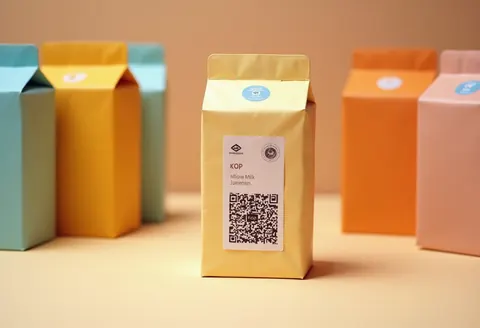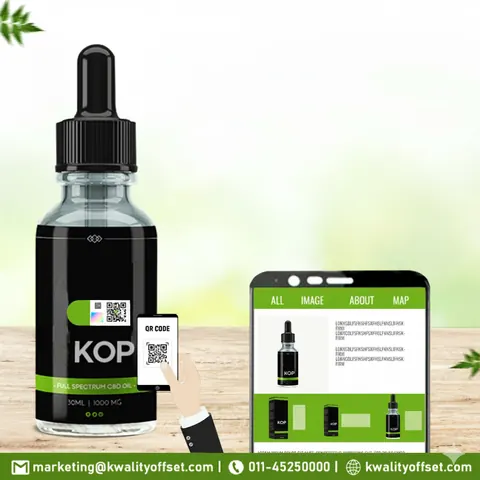
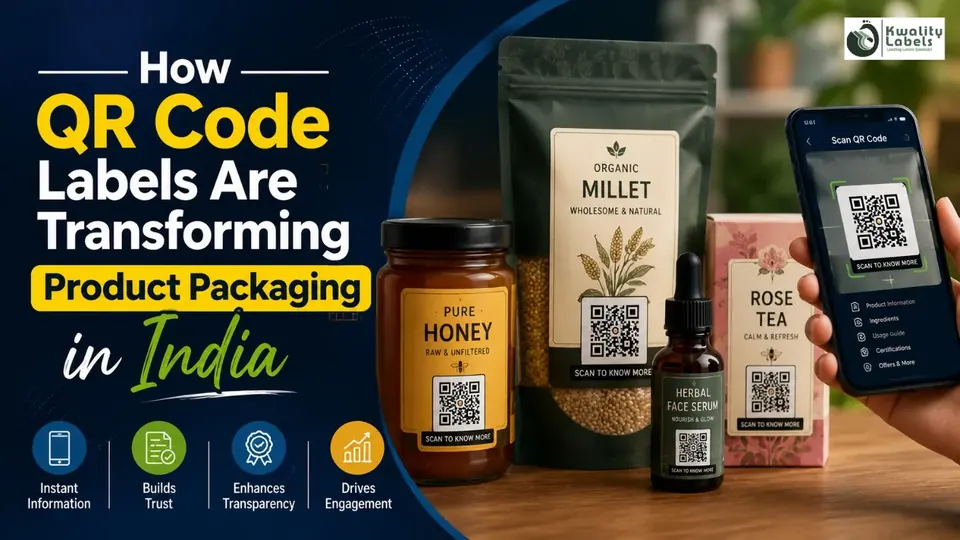
Counterfeit medicines, fake spirits and look-alike FMCG products cost Indian brands revenue and, far more importantly, consumer trust. A printed QR code is one of the simplest ways to close that gap. When every pack carries a unique, scannable code, a shopper, a retailer or an inspector can check in seconds whether the product is genuine, where it came from and whether it has been recalled.
QR code labels are product labels that carry a two-dimensional code linking the physical pack to digital information. Printed as static codes, they link to a web page; printed as variable data, every label carries its own code and becomes a unique digital identity for that single unit. Kwality Labels prints both, alongside the security and premium finishes brands already use on their packs.
What Is a QR Code Label?
A QR code label is a self-adhesive or wet glue label that includes a Quick Response code — a square matrix of black and white modules that any smartphone camera can read. The code can hold a URL, a serial number, batch details or a verification token.
There are two broad types:
- Static QR codes — the same code on every label in a run, usually linking to a product page, recipe, usage video or brand campaign.
- Variable (unique) QR codes — a different code on every single label, generated from a database during printing. These are the basis for authentication, track-and-trace and one-time promotional codes.
Why Are Indian Brands Adding QR Codes to Packaging?
Authentication and anti-counterfeiting
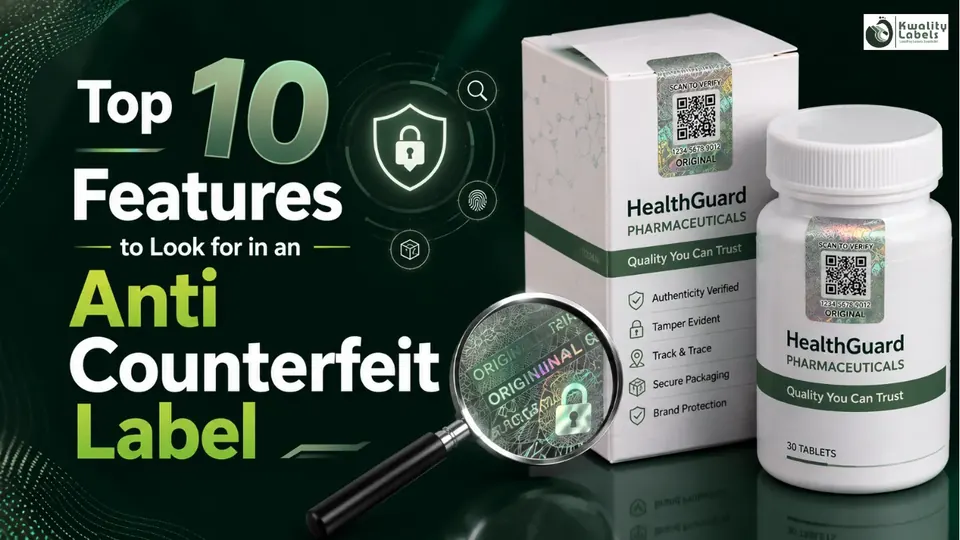
A unique QR code lets consumers verify a product is genuine. When the same code is scanned more than once, or in an unexpected location, the brand knows a label may have been copied. Combined with tamper evident materials, holograms or microscopic authentication QRs, a serialized code is far harder to fake than a printed logo.
Batch traceability and recalls
Variable QR codes can carry or link to batch number, manufacturing date and plant. If a quality issue appears, a brand can identify exactly which units are affected and where they were shipped, instead of recalling an entire production month.
Consumer engagement and first-party data
A QR code turns the pack into a channel. Brands use them for cashback offers, loyalty programmes, contests, recipe content and product registration. Each scan tells the brand which product, which city and which campaign drove the interaction.
More information without a bigger label
Small packs have limited space for ingredients, multilingual instructions or detailed usage guidance. A QR code can link to the full information while the printed label stays clean and compliant.
Which Industries Use QR Code Labels the Most?
- Pharmaceuticals and nutraceuticals — authentication, serialization and patient information.
- Wine and spirits — anti-counterfeit verification and premium brand storytelling.
- FMCG and food & beverages — promotions, cashback, loyalty and batch traceability.
- Cosmetics and personal care — authenticity checks and how-to content.
- Industrial and electronics — asset tracking, warranty registration and spare-part identification.
What Makes a QR Code Label Work in Practice?
A QR code is only useful if it scans first time, every time. When specifying QR code labels, check:
- Print quality and contrast Sharp modules and strong contrast against the background are essential; low-contrast metallic or textured areas can stop codes scanning.
- Quiet zone and size Leave a clear margin around the code and size it for the scanning distance and pack curvature.
- Unique data integrity For variable codes, every code must be printed once, in sequence, with no duplicates or gaps — the database and the press must stay in step.
- Verification on press Camera inspection should check codes during the run so unreadable labels are rejected before dispatch.
- Security layering For brand protection, combine the code with tamper evident constructions, holograms or covert features so the label itself is hard to reproduce.
How Kwality Labels Prints QR Code Labels
Kwality Labels prints QR code labels on its digital press for variable data and short runs, and on flexo and offset for long static runs. Codes can be combined with the finishes premium brands expect — foil, embossing, tactile varnish — and with security features such as tamper evident materials and microscopic authentication QRs. Every job is checked by camera inspection before it leaves the plant.
Explore variable data labels and our label printing services, or contact the team to plan a QR-enabled label for your next launch.
Frequently Asked Questions
What is the difference between a static and a variable QR code label?
A static QR code is the same on every label and usually links to a web page. A variable QR code is unique to each label, so it can identify a single unit for authentication, track-and-trace or one-time promotions.
Can QR code labels stop counterfeiting?
A unique QR code makes copying much easier to detect, because duplicate scans and scans in unexpected locations can be flagged. It is strongest when combined with tamper evident materials, holograms or covert security features.
Will a QR code scan on a foil or textured label?
It can, but the code needs a high-contrast, flat area. Kwality positions codes on suitable areas of premium labels and verifies them during printing.
Can QR codes be added to existing label designs?
Yes. A QR code can usually be added to an existing design with minor layout changes, and variable codes can be printed alongside batch and date information.
Which print process is used for variable QR codes?
Variable QR codes are printed digitally, because each label carries different data. Static codes can be printed on flexo or offset as part of the main design.